| Scientific Name | Probosciger aterrimus |
|---|---|
| Common Name | Palm Cockatoo |
| Care Level | Advanced |
| Lifespan | Up to 60 years |
| Adult Size | 22-24 inches |
| Diet | Seeds, fruits, nuts, flowers |
| Origin | New Guinea, Indonesian islands |
| Temperament | Independent, affectionate |
History & Domestication
The Palm Cockatoo, with its distinguished appearance and striking features, originates from the rainforests of New Guinea and surrounding Indonesian islands. Historically, these birds held cultural significance to the indigenous communities of their native lands. Tribal folklore often painted them as revered spirits or messengers.
While they have not been domesticated in the traditional sense, their captivating presence and unique attributes have long made them a sought-after species within the exotic pet trade. This demand, coupled with deforestation and habitat loss in their native ranges, has led to a decline in their wild populations. Conservation efforts are now underway to ensure their survival.
Size
Palm Cockatoos are one of the larger species within the parrot family, boasting an average length ranging from 22 to 24 inches from beak to tail. This size, combined with their robust frame, makes them a truly imposing bird.
Lifespan
With a potential lifespan stretching up to 60 years or more, adopting a Palm Cockatoo is a long-term commitment. It’s not uncommon for these birds to outlive their original owners, underscoring the need for robust long-term care plans.
Breeding
In their natural habitat, Palm Cockatoos are unique in their nesting behavior. Unlike many other parrot species, males display an unusual drumming behavior using sticks to attract potential mates. The female typically lays a single egg, with both parents sharing incubation duties. In captivity, breeding requires spacious aviaries, proper nutrition, and an understanding of their unique breeding behaviors.
Unique Features
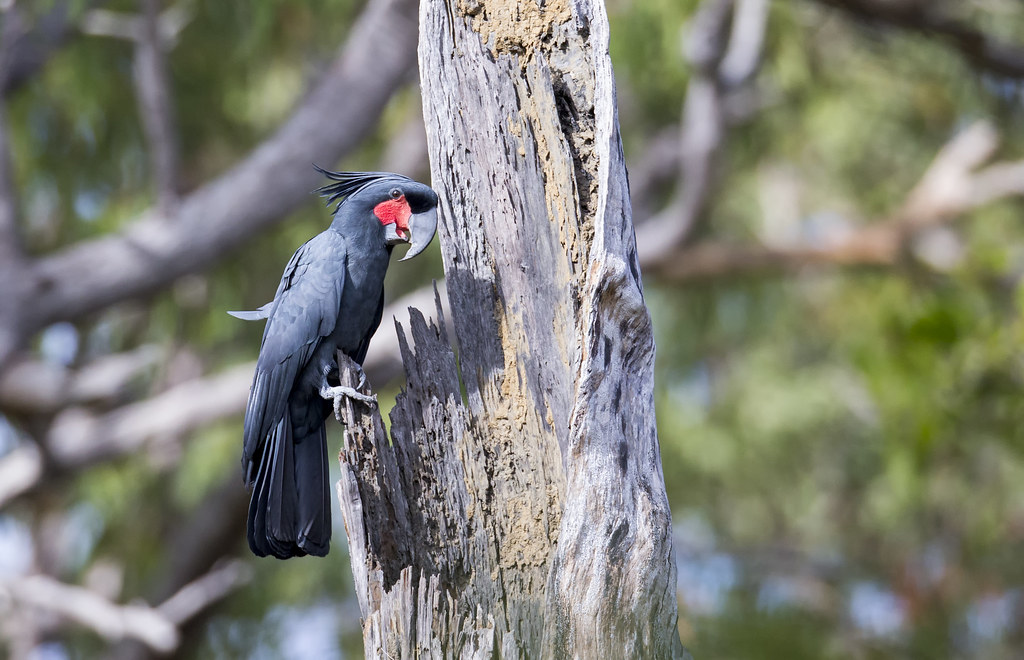
Beyond their impressive size, Palm Cockatoos are easily distinguished by their smoky-grey plumage, red cheek patches, and notably large beaks. Their beaks, while intimidating, are incredibly powerful tools, allowing the bird to crack open hard nuts with relative ease.
Behavior and Temperament
Palm Cockatoos are known for their independent nature. While they can form close bonds with their human caregivers, they’re also content spending time alone. That said, they’re curious and intelligent birds, often requiring mental stimulation through toys and interaction. Their vocalizations, though not as diverse as some parrots, can be quite loud, particularly when they seek attention.
Handling
Although they have an independent streak, regular handling and socialization are essential for a well-adjusted Palm Cockatoo. They are receptive to training, particularly with positive reinforcement techniques. Time outside their cage, either free-flying in a secure area or on a perch, is critical for their well-being.
Grooming Needs
Routine grooming is essential for Palm Cockatoos. This involves regular nail trims, beak checks, and wing clipping if required. Bathing or misting is also necessary to maintain the health and luster of their feathers.
Diet & Nutrition
A balanced diet is crucial for the health and longevity of Palm Cockatoos. While they naturally consume seeds, nuts, and fruits in the wild, a captive diet should be diverse. This includes high-quality pellets, fresh fruits, vegetables, and occasional treats. Fresh water should always be available.
Temperature
Originating from tropical climates, Palm Cockatoos prefer warm, humid environments. In cooler regions, they need to be housed indoors or provided with heated aviaries. If kept indoors, ensure the room is well-ventilated and free from drafts.
Common Health Issues
Palm Cockatoos, like all birds, can be susceptible to a range of health issues. These include fungal and bacterial infections, respiratory problems, and beak deformities. Regular check-ups with an avian vet are essential to monitor their health.
Habitat Requirements
Given their size, a spacious cage is non-negotiable for Palm Cockatoos. The cage should be large enough for them to spread their wings and move around comfortably. It should also include perches, toys, and climbing structures to keep them entertained.
Cost of Care
Acquiring a Palm Cockatoo can be a significant investment. Beyond the initial purchase or adoption cost, potential owners should factor in expenses related to housing, feeding, veterinary care, and toys. Given their longevity, this translates to decades of care, making it vital for prospective owners to be financially prepared for the responsibility.