
| Aspect | Detail |
|---|---|
| Scientific Name | Chrysemys picta |
| Common Name | Painted Turtle |
| Care Level | Beginner to Intermediate |
| Lifespan | 20-30 years |
| Adult Size | 5-10 inches in length |
| Diet | Omnivorous |
| Origin | North America |
| Temperament | Generally docile |
About the Painted Turtle
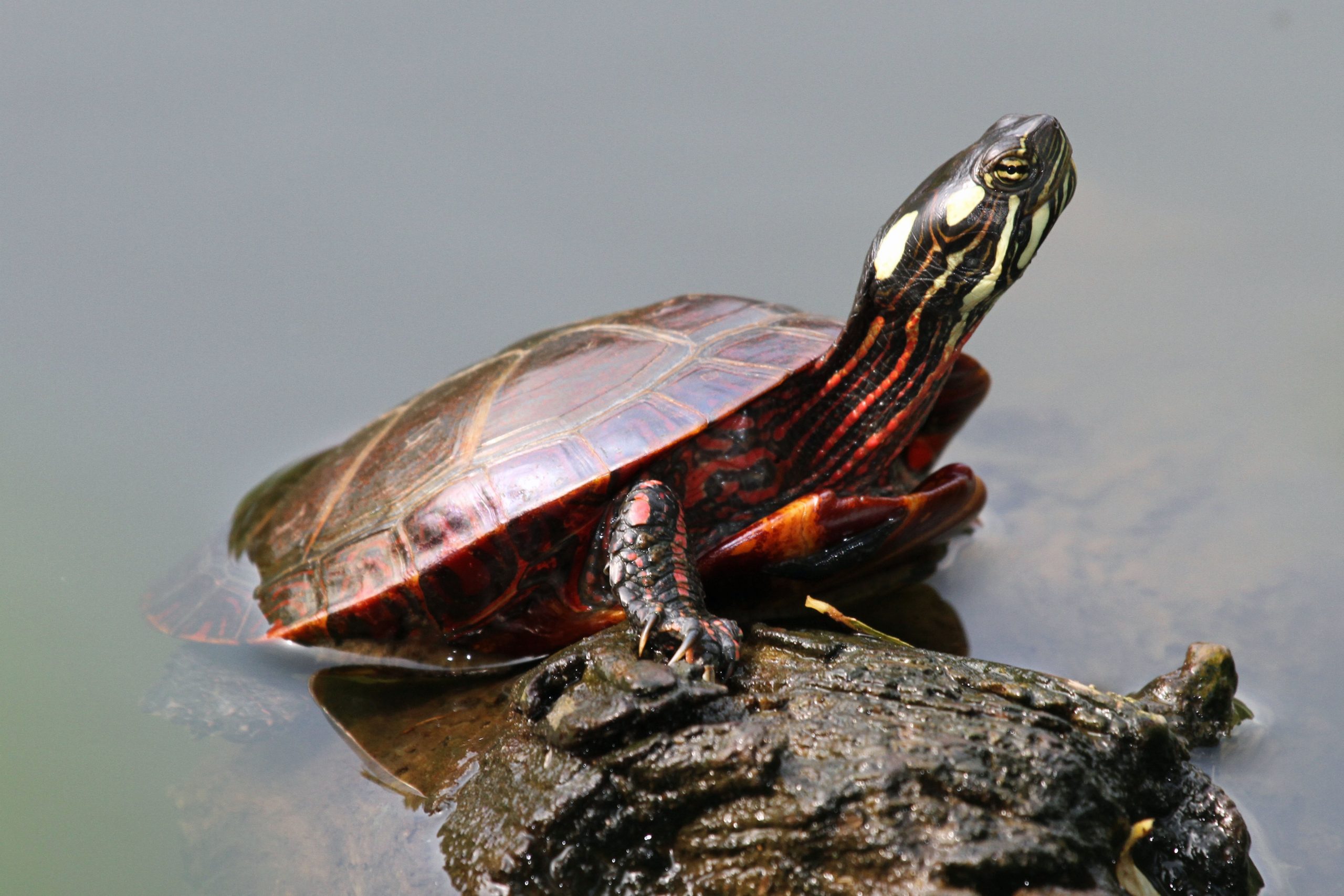
The painted turtle, with its vibrantly colored shell and markings, is a common freshwater turtle species in North America. Often seen basking on logs or rocks in ponds, lakes, and wetlands, they’ve also become popular in the pet trade due to their engaging behavior, manageable size, and relative ease of care. Their iconic appearance, coupled with their docile temperament, has made them one of the most sought-after turtle species for both novice and seasoned reptile enthusiasts.
Size
The size of a painted turtle largely depends on its subspecies, but adults typically measure between 5 to 10 inches in shell length. Females are generally larger than males. The four subspecies – Eastern, Western, Southern, and Midland painted turtles – each have slightly different size ranges and coloration patterns.
Unique Features
The name “painted” turtle isn’t accidental. These turtles are adorned with bright, intricate patterns that look as though they were painted on. Their carapace (top shell) boasts a smooth, olive to black base color, decorated with red, orange, and yellow markings on the margins. Their plastron (bottom shell) might have a reddish or yellowish hue, often with a complex pattern. Additionally, their limbs and heads possess vibrant yellow stripes, further enhancing their captivating appearance.
Behavior and Temperament
Painted turtles, by nature, are docile and can often be observed engaging in communal basking sessions, stacking atop one another on chosen basking sites. In the wild, they’re diurnal, active mainly during the day, and spend a significant amount of time basking in the sun, which helps regulate their body temperature and aids in the synthesis of vitamin D3.
Handling
While painted turtles can be handled, it should be done so sparingly to minimize stress. They’re not inherently aggressive but may scratch or bite if frightened. When handling, it’s essential to grip them gently but firmly on both sides of the shell, keeping them close to the ground to prevent injury from potential drops. Regular, brief interactions can help desensitize them to handling, but remember that turtles, in general, are more for observation than tactile interaction.
Diet & Nutrition
In their natural habitat, painted turtles have a varied omnivorous diet, consuming aquatic plants, small fish, insects, and even carrion. In captivity, their dietary needs can be met with high-quality commercial turtle pellets as a base, supplemented with a mix of fresh foods such as leafy greens, insects like crickets or mealworms, and occasional aquatic proteins like small fish or shrimp. This varied diet ensures they receive all necessary vitamins and minerals for healthy growth and shell development.
Temperature
Being ectothermic, painted turtles rely on their environment for thermoregulation. Aquatic temperatures should be maintained between 70-75°F (21-24°C), with a basking spot that reaches up to 85-90°F (29-32°C). Proper heating elements, both for the water and the basking area, are essential to maintain these temperatures.
Common Health Issues
Painted turtles, if not given proper care, can suffer from several health complications. Some common issues include metabolic bone disease, resulting from insufficient UVB light or calcium intake, respiratory infections from cold or poorly maintained water, and shell rot, a consequence of fungal or bacterial infections. Ensuring a clean habitat, proper nutrition, and regular veterinary check-ups can mitigate many of these potential problems.
Breeding
Breeding painted turtles in captivity is feasible, but it requires adequate preparation and understanding of their breeding behaviors. Before breeding season, both male and female turtles can benefit from a brumation period to simulate natural seasonal changes. Post-brumation, increased activity and mating behaviors may be observed.
Mating Habits
Male painted turtles are known for their unique courtship display, where they approach a female and flutter their long front claws near her face. If the female is receptive, she will allow the male to mount her shell for copulation. After successful mating, the female will seek a suitable nesting site, typically a sandy or soft soil area, to lay her eggs. In captivity, providing a nesting box with the appropriate substrate can encourage natural nesting behaviors.


