
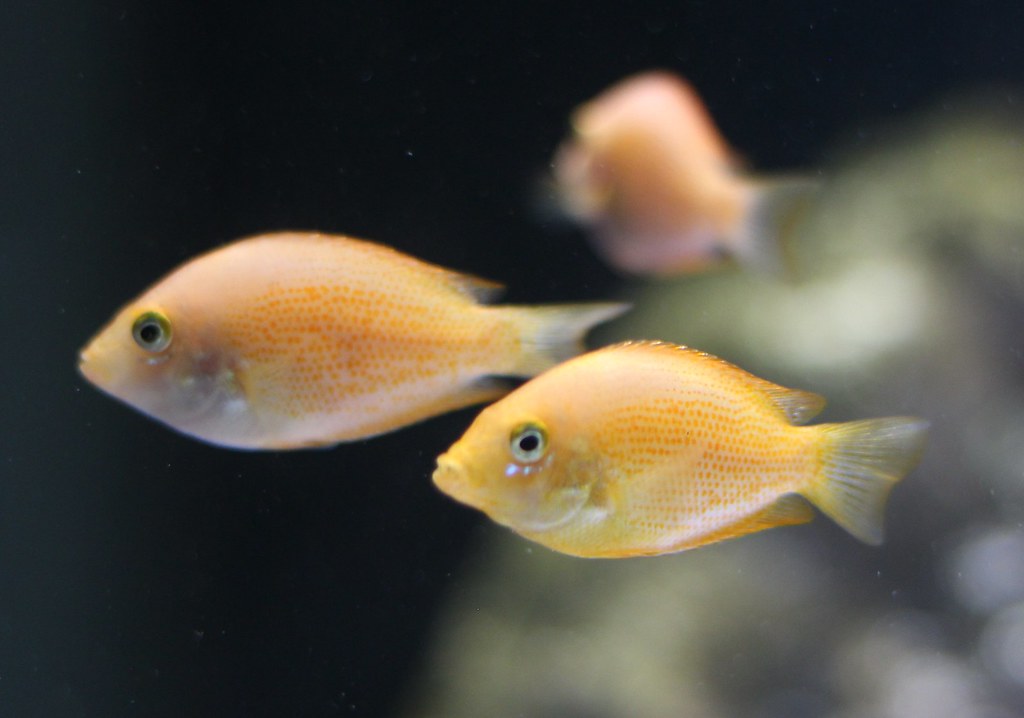
| Species Name | Etroplus maculatus |
|---|---|
| Common Name | Orange Chromide |
| Care Level | Easy |
| Lifespan | 5-7 years |
| Adult Size | Up to 3 inches (7.5 cm) |
| Diet | Omnivore |
| Minimum Tank Size | 20 gallons |
| Temperature | 72°F – 80°F (22°C – 27°C) |
| Water Conditions | pH 6.5-8.0, Soft to moderately hard |
About the Orange Chromide – Species Summary
The Orange Chromide, scientifically termed as Etroplus maculatus, is a petite and vividly colored freshwater cichlid. Originating from the southwestern parts of India and Sri Lanka, they are primarily found in lagoons and brackish waters. Due to their striking appearance and relatively undemanding care requirements, Orange Chromides have piqued the interest of both novice and experienced aquarists. Their vivacious nature and bright hues make them an attractive choice for aquarium enthusiasts looking to add a splash of color to their tanks.
Orange Chromide Lifespan
The Orange Chromide has a typical lifespan ranging between 5 to 7 years when provided with proper care. This includes a balanced diet, a stable environment, and regular health monitoring to ensure they remain disease-free.
Appearance
As their name suggests, the primary hue of the Orange Chromide is a vibrant orange, adorned with three black vertical stripes on their body. They also possess a distinctive black spot on their caudal fin. Their bright colors and dynamic patterns make them stand out, especially when contrasted against a backdrop of lush green aquatic plants.
Average Size
When fully mature, the Orange Chromide can grow up to a size of 3 inches or approximately 7.5 cm.
Orange Chromide Care
Tank Size
A minimum tank size of 20 gallons is advisable for the Orange Chromide. This ensures that they have ample space to move about and exhibit their natural behaviors.
How To Set Up Their Tank
Replicating the lagoon-like conditions from their native habitat would be ideal for the Orange Chromide. This includes a sandy substrate, coupled with rocks and driftwood for hiding and resting spots. Aquatic plants that can thrive in brackish conditions, like Java fern and Anubias, would be an excellent addition. For those looking to keep them in freshwater settings, ensure the tank is well-planted and provides multiple hiding spaces.
Lighting Requirements
Orange Chromides do not have stringent lighting requirements. Moderate lighting, which supports plant growth and illuminates their bright colors, would suffice.
PH
A pH level ranging from 6.5 to 8.0 is suitable for the Orange Chromide.
Temperature
Maintaining a temperature between 72°F and 80°F (22°C to 27°C) ensures that the Orange Chromide remains active and healthy.
Water Parameters
Soft to moderately hard water conditions are ideal for the Orange Chromide. Regular water changes and monitoring are essential to maintain these parameters and to keep nitrate levels in check.
Disease Potential
While Orange Chromides are relatively hardy, they can be susceptible to common fish diseases such as Ich and fin rot if not cared for properly. Good hygiene, quarantining new tank inhabitants, and regular monitoring can mitigate these risks.
Food & Diet
Being omnivorous, the Orange Chromide’s diet encompasses both plant-based and meaty foods. Flakes, pellets, live, and frozen foods like brine shrimp and bloodworms can be given. Vegetables such as spinach and zucchini are also relished.
Behavior and Temperament
Orange Chromides are generally peaceful but can display territorial tendencies, especially during breeding times. They’re active swimmers and can often be seen darting around the tank or sifting through the substrate.
Tank Mates
Choosing tank mates for the Orange Chromide requires a bit of caution, given their semi-aggressive nature. Other peaceful fish of similar size, such as mollies or tetras, can be considered. However, avoid keeping them with larger, more aggressive fish that might bully or prey on them.
Breeding
Breeding Orange Chromides in captivity is a feasible endeavor. They often choose a flat surface, like a rock or a piece of wood, to lay their eggs. Post-spawning, both parents take turns guarding the eggs and tending to the fry. It’s advisable to provide a protein-rich diet to the young ones for optimal growth.